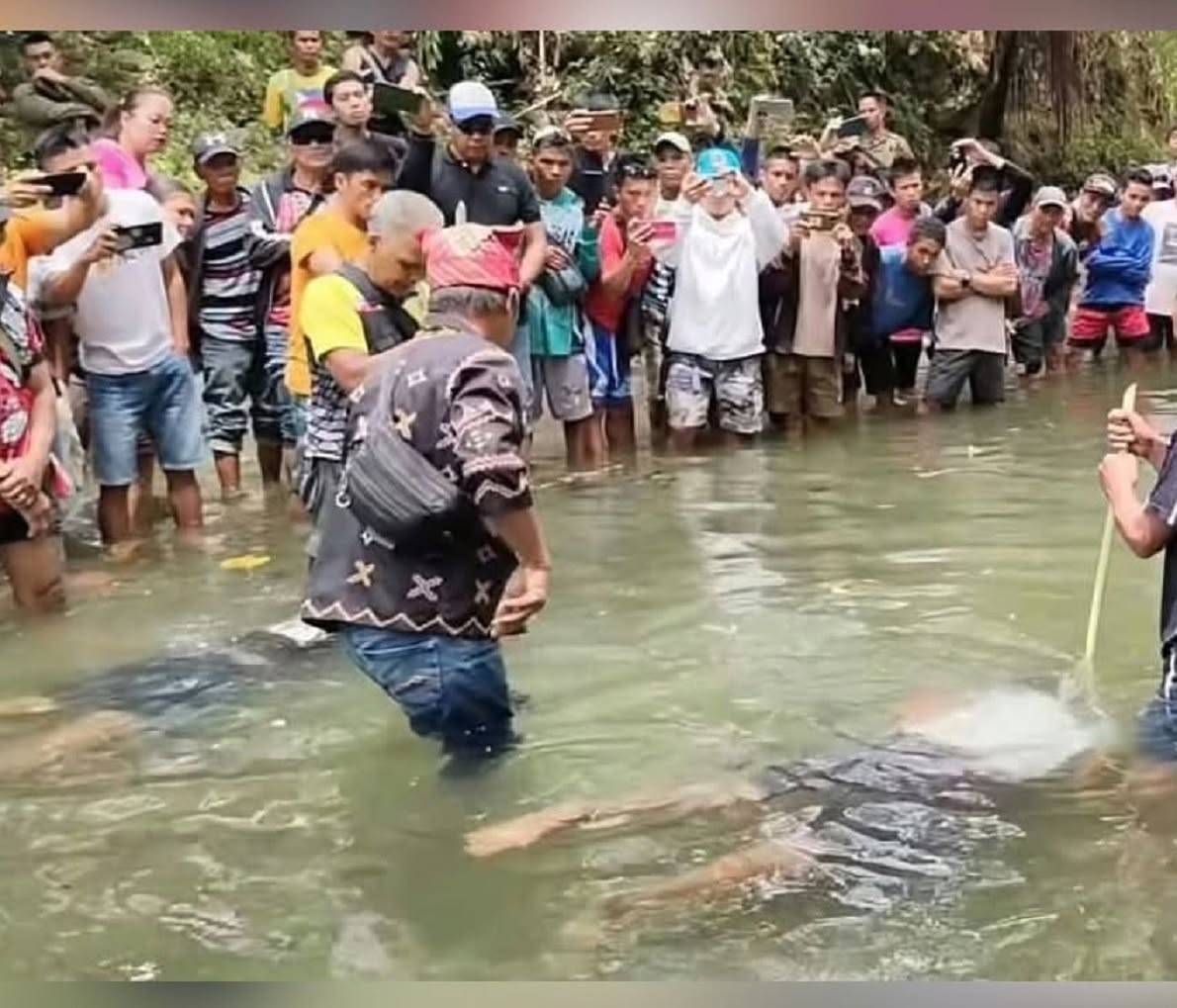
GENERAL SANTOS CITY --- Two ethnic Blaan farmers were drowned in a river while forced to its bottom by tribal leaders as part of a bizarre centuries-old conflict resolution process in Barangay Datal Angas in Alabel town in Sarangani on Friday, October 16.
Blaans in South Cotabato and Sarangani provinces in Region 12 still practice what is for them “sulif” procedure in resolving conflicts among members of their tribe, where each of two individuals locked in any dispute shall stay underwater and whoever emerges first losses the challenge, outrightly judged as the one who had done the other wrong.
The procedure is applicable to any Blaan men and women who have misunderstandings, or to someone accused of any offense and an accuser who had sought intervention by their tribal council.
Local executives and officials of the Police Regional Office 12 told reporters on Saturday that the two fatalities in the peculiar incident, Tony Mansag and Gaspar Palasanon, had squabled over ownership of a parcel of land in Barangay Datal Angas inside a Blaan ancestral domain in Alabel.
One had accused the other of encroaching on his agricultural land, according to local executives and officials of the Alabel Municipal Police Station.
Tribal leaders together organized a sulif at a stretch of a river in a secluded area in Barangay Datal Angas and ordered them both to stay underwater to determine who can hold breath longer and shall have control of the small piece of land they are both squabbling for.
Both of them struggled to stay long underwater and, in the process, eventually got drowned, according to municipal and provincial police officials and ranking employees of the Alabel Risk Reduction and Management Office.
Their relatives lamented having permitted them to submit themselves to such a ritual that their tribal leaders initiated.
Local executives and cause-oriented organizations in areas where there are Blaan enclaves have long been opposing such practice, but tribespeople and their datus and panditas, or religious leaders, keep asserting that the Indigenous Peoples Rights Act, also known as the Republic Act 8371, allows them to enforce their tribal justice system that have processes non-indigenous people find so scary and against humanitarian doctrines.