LAMITAN CITY, Philippines --- Residents in Cotabato City and in towns in Maguindanao del Norte and in Basilan are certain that four, from among the 80 newly-elected members of the Bangsamoro parliament, will function efficiently with the help of their patriarchs and the leaders of their clans who had supported the Moro secessionist uprising in decades past.
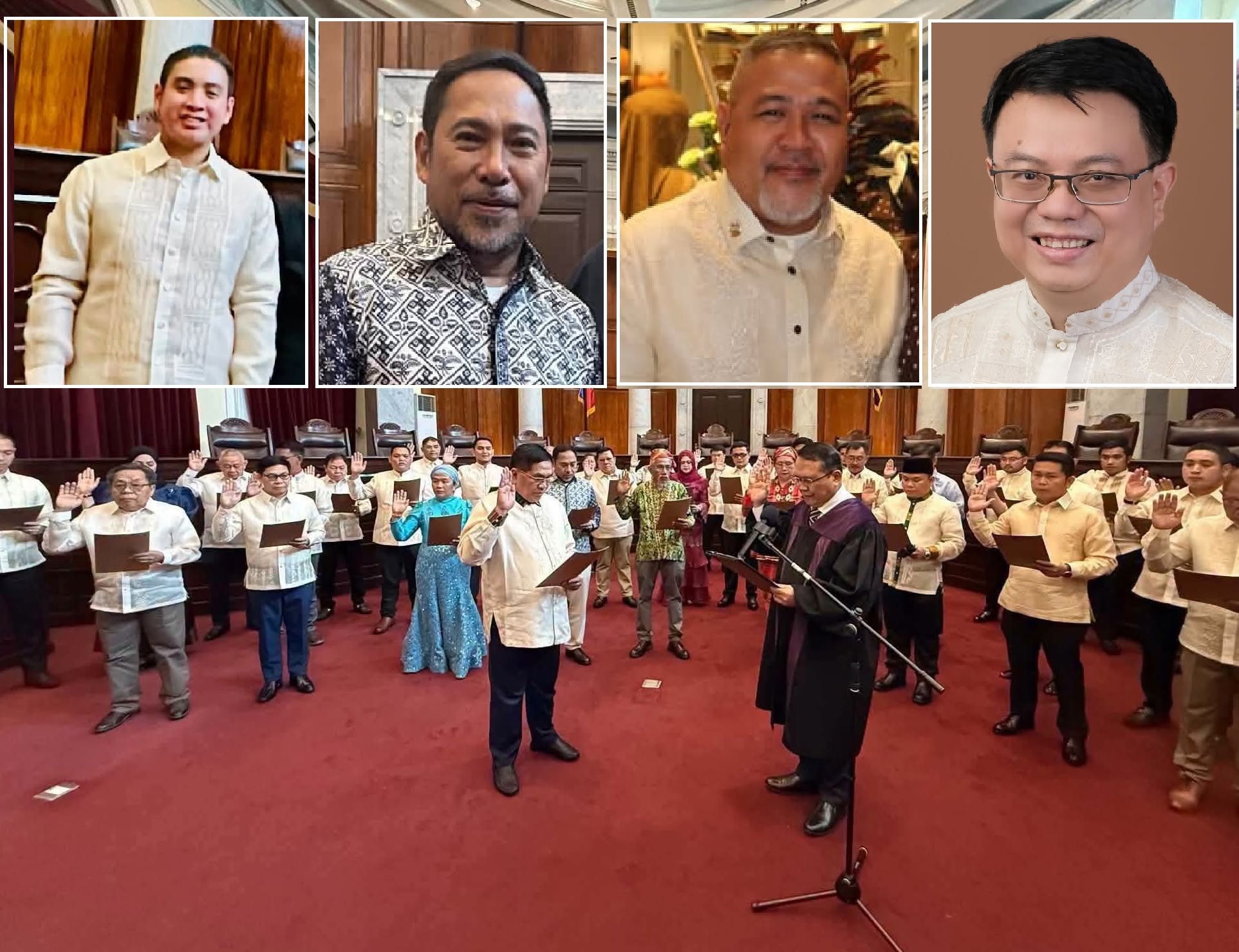
The four regional lawmakers elected during the September 14 Bangsamoro parliamentary elections they are referring to, Jay Datumanong Salliman of Basilan, Ma-arouph Bajunaid Candao, Zulfikar-Ali Sergio Bayam and Ishak Veloso Mastura, all from big and influential clans in the adjoining Cotabato City and Maguindanao del Norte province, took oath as members of the region’s 80-member parliament at the Supreme Court in Manila on Saturday, October 3.
The symbolic rite, led by BARMM's interim chief minister, Abdulraof Abdul Macacua, also elected last September 14 as representative of a parliamentary district covering barangays in Cotabato City and in Maguindanao del Norte, was administered by Supreme Court Associate Justice Japar Dimaampao, who hails from Lanao del Sur province.
All four of them --- Salliman, Candao, Bayam and Mastura --- belong to the Bangsamoro Federalist Party (BFP) that now has combined 32 elected parliamentary district and party bloc representatives to the regional parliament of the Bangsamoro Autonomous Region in Muslim Mindanao.
The territory of BARMM encompasses the provinces of Maguindanao del Norte, Maguindanao del Sur, Lanao del Sur, Basilan and Tawi-Tawi and the cities of Lamitan, Marawi and Cotabato.
The BFP’s figurehead in Lamitan City, Mayor Roderick Furigay, told reporters on Sunday, October 4, that he and his constituents are sure that Salliman, a lawyer, shall stand well for the residents of Basilan he is to represent in the Bangsamoro parliament, under the guidance of his father, Hadjiman Salliman, the vice governor of the province.
The older Salliman had also served as congressional representative and as governor of Basilan before he was elected vice governor of the province during the May 12, 2025 elections.
“Under the guidance of his father, he will surely function well as a conduit of the communities in one of the four parliamentary districts in our province that he is to represent in the parliament,” Furigay said.
Residents of Cotabato City and Maguindanao del Norte, among them barangay officials and Moro datus, are also sure that Candao, Bayam and Mastura, all from noble Maguindanaon clans, can all speak well too in the parliament about all issues and concerns besetting the Christian, Muslim and non-Moro indigenous communities in both areas.
Salliman and Mastura are to function as representatives of parliamentary districts in Basilan and Maguindanao del Norte, respectively, while Bayam and Candao are in the bloc that shall represent the BFP to the BARMM parliament.
Candao’s father, the lawyer Zacaria Candao, was a member of the MNLF panel that crafted, along with counterpart government peace brokers Simeon Datumanong, Carmelo Barbero, Manuel Yan, Sr. and Lininding Pangandaman, the vaunted December 23, 1976 Tripoli Agreement in Tripoli, Libya.
The older Candao was also the first elected regional governor of the Autonomous Region in Muslim Mindanao, or ARMM, which was established in 1991.
The lawyer Datumanong, who passed away in 2017, is grandfather of the now elected BARMM parliament member Salliman.
Datumanong was chairman of the Lupong Tagapagpaganap ng Pook 12, or LTP 12, from the late 1970s until the early 1980s.
The LTP 12, also an autonomous regional government set-up but had limited powers, was established by the national government as part of the peace overture then of the late President Ferdinand Marcos, Sr. with the southern Moro communities.
The 1976 Tripoli Agreement was to become the primary reference in the crafting of the September 2, 1996 final truce between the government and the MNLF.
It was also partly used as a reference in the peace talks between the government and the Moro Islamic Liberation Front, capped off with the forging by both sides of the Comprehensive Agreement on Bangsamoro in 2014 that paved the way for the creation of BARMM in 2019 via a congressional charter, the Bangsamoro Organic Law, or Republic Act 11054.
Mastura is son of the lawyer and historian Michael Mastura, former congressional representative of the first district of the still undivided Maguindanao province and legal adviser to the founder of the MILF, the late Salamat Hashim.
Mastura had served, before his election as parliament member on September 14, as regional trade secretary of the now defunct ARMM, replaced with a more empowered BARMM in 2019.
He also is a member of the interim Bangsamoro parliament, as an appointee of President Ferdinand Marcos, Jr. The interim parliament's tenure shall end with the first session of the duly-elected parliament members on October 30.
Bayam is son of an erstwhile MNLF combatant, the late ethnic Maguindanaon Hadji Ahmad Manduyog Bayam, also a Moro datu, whose ancestors fought the Spaniards from Spain in Europe and the Americans from the United States who had invaded Mindanao and, subsequently, the Japanese forces during World War 2.
The father of Bayam was also an appointed member of the LTP 12's lawmaking body, replaced with ARMM during the time of President Corazon Aquino.
The elders in the Bayam clan in Cotabato City and in Maguindanao del Norte's Kabuntalan and Northern Kabuntalan towns, among them professionals employed in different government offices and barangay officials, had told reporters that they will help Bayam push forward his peace and development goals as an elected regional lawmaker.